
DAM Trends 2026: Why AI Only Works When Metadata Is in Order
By 2026, Digital Asset Management (DAM) will evolve even further from a mere storage solution into a strategic layer within your content organization. AI accelerates this development, but it does not automatically resolve an organization’s structure, language, and logic.
Many companies expect AI to instantly get all metadata right, perfectly identify assets, and automatically make search smarter. In practice, things work differently: AI can provide support, but only if metadata, taxonomy, processes, and governance are already in place.
What is DAM?

Digital Asset Management (DAM).
Digital Asset Management, or DAM, is where organizations centrally manage, enrich, and retrieve their digital files. These include images, videos, documents, logos, campaign assets, and product materials.
For organizations just getting started with DAM, here’s a useful rule of thumb: a file without metadata and context is not yet a valuable asset. Only when information such as product numbers, campaign names, organizational units, language, rights, and status is added does content become truly discoverable and usable.
Why 2026 Is an Important Year for DAM
By 2026, the DAM market is moving toward greater intelligence, greater integration, and greater accountability. A recent Activo x DAM News discussion highlights that DAM is increasingly becoming part of a broader ecosystem that includes AI, creative tools, PIM, CMS, e-commerce, and knowledge management.
At the same time, the classic DAM question remains: how do you quickly find content, how do you keep track of versions, and how do you ensure that teams are all on the same page? That is precisely why metadata remains the foundation, even as AI becomes increasingly prominent.
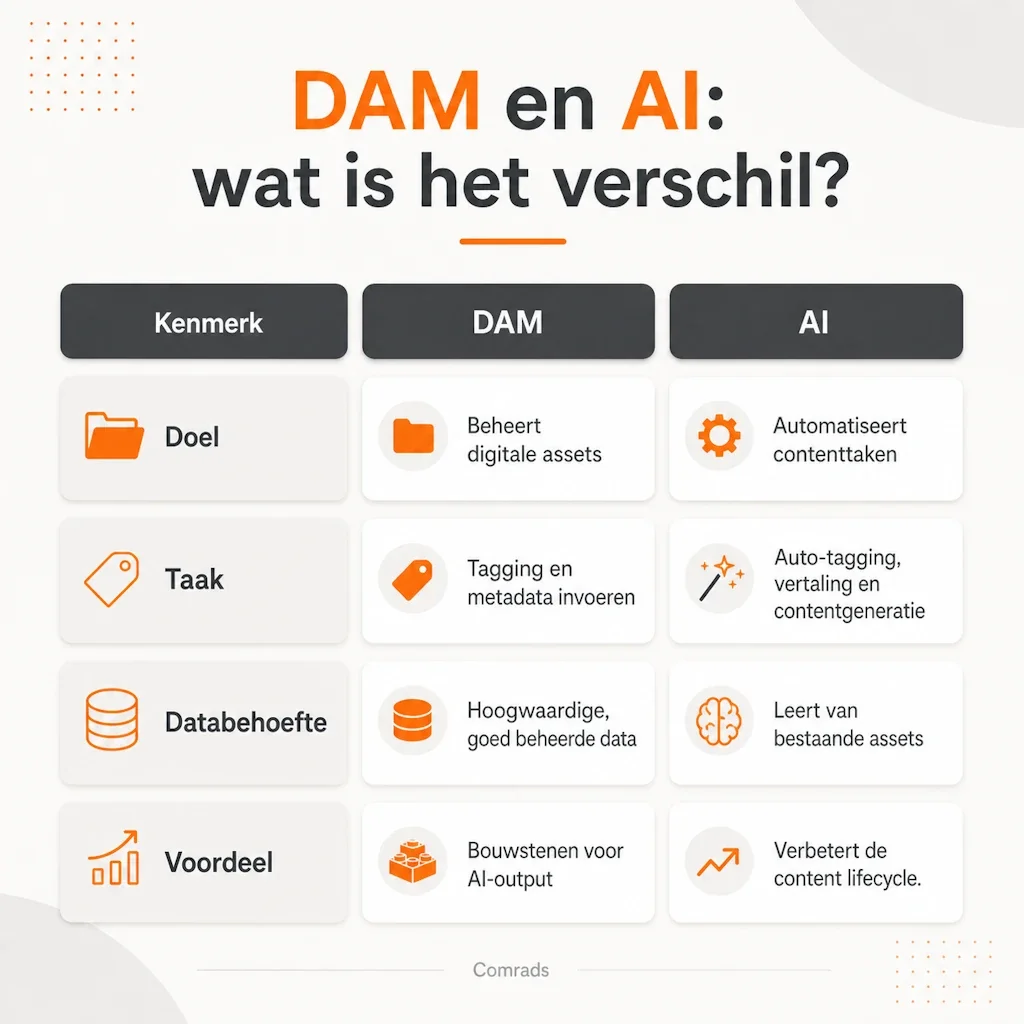
Created with ChatGPT: What is the difference between DAM and AI?
AI in DAM: powerful, but not magical
AI helps with automatic tagging, search experiences, transcription, classification, and pattern recognition. But AI doesn’t automatically know an organization’s product numbers, campaign codes, project names, and internal terminology; that knowledge must first be structured, consistent, and widely available. This means that generic tags such as “tree,” “person,” “nature,” or “happy face” often have little value for internal use. The real question isn’t whether AI recognizes something, but whether it also recognizes what teams are actually looking for?
First structure, then automate
The best approach is simple: metadata first, then AI enrichment. If you start with a solid keyword framework, controlled terminology, and clear agreements on fields and ownership, you’ll be able to make AI truly useful. This aligns with previous Comrads blog posts on metadata and DAM implementation: structure isn’t an afterthought, but rather the prerequisite for working in a scalable and consistent manner.
Provenance and C2PA Explained
What does provenance mean?
Provenance refers to the origin of a digital file. It concerns the question of where the content comes from, who worked on it, and how the original version remains traceable.
What is C2PA?
C2PA is an open standard for content provenance and authenticity. The standard adds verifiable information to digital media, enabling organizations to verify whether content has been created, modified, or distributed within a trusted chain.
For beginners, C2PA is best understood as a digital provenance label. Especially now that AI makes images easier to manipulate, it’s important to know what’s real, what’s been altered, and which version serves as the source. Source: https://c2pa.org/
What do these trends mean for organizations?
The DAM trends of 2026 aren’t just about technology; they’re primarily about mature content management. Organizations that invest in metadata, governance, and provenance are laying the groundwork for AI to truly scale in the future.
In this context, DAM is evolving from a standalone system into a component of a broader process. This includes integrations with Adobe, CMS, PIM, and e-commerce platforms, as well as workflows in which creation, review, distribution, and control are better aligned.
The biggest misconception
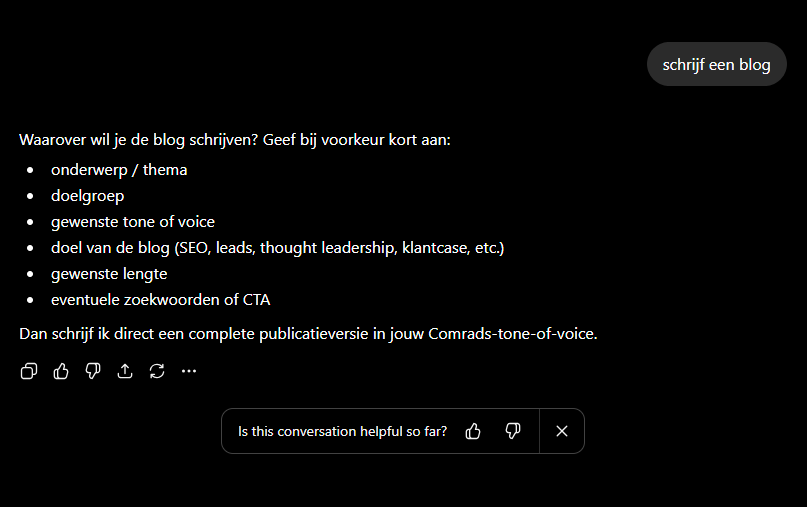
The biggest misconception is that AI will simply take over the metadata and content structure. In reality, AI mainly enhances what already exists: good structures get better, while weak structures become more apparent. Just ask ChatGPT or another AI program: “write a blog”. Chances are the tool will immediately ask back: what should the blog be about, what topic or theme, for which target audience, what tone of voice should be used, what is the goal, how long should the piece be, and which keywords or CTAs should be included? That shows exactly what applies in DAM as well: without context and metadata, AI doesn’t know what to do or just does whatever.
That’s why the question isn’t whether AI is being used, but how the content environment is being prepared for AI. That’s exactly where metadata, taxonomy, and governance make all the difference. Without that foundation, AI will mainly produce generic output, and just like with a poor prompt, that might generate text, but it won’t automatically be the right text for your organization.
How Comrads views this
For years, Comrads has emphasized the importance of DAM as a strategic foundation for strong brands, scalable content, and more efficient workflows. Previous blog posts have also highlighted metadata, AI tagging, and smart information architecture, and this trend will only become more and more relevant in 2026. You can read more about this inSmart Metadata in DAM: How to Work Faster and More Consistently,How AI and DAM Together Make Content Management Smarter, andComrads Blog: Developing Keyword Frameworks for DAM.
Comrads also uses AI, but with the same guiding principle: AI should complement existing workflows, not replace them. Automation only works effectively when it’s clear which terms are used internally, which fields are important, and how teams locate content. For more context on this approach, see: Optimize Digital Asset Management with Comrads AI >.
Relevant DAM blogs and content from Comrads
For readers who are just getting started with DAM, it’s also helpful to see the bigger picture: DAM is the central hub where organizations manage, organize, and share their digital assets. This concept is also highlighted on our page about DAM and in our FAQ.
Practical next steps
1. Map out your metadata
Identify which folders or fields are currently in use, where terms are duplicated, and what information is frequently missing from search results. Without this assessment, AI will remain largely generic rather than organization-specific.
2. Make internal terms the guiding principle
Ensure that product numbers, project names, campaign codes, descriptions, and organizational terms are organized within a controlled structure. This makes search results more relevant than relying solely on visual AI tags.
3. Use AI as a catalyst
Use AI for tagging, summarization, search suggestions, and classification, but build on an existing foundation. This will increase efficiency without compromising control over the content.
4. Consider provenance early on
For organizations that work with AI-generated content or content that is widely distributed, traceability is not a luxury. Provenance and C2PA help ensure that the source, edits, and reliability remain transparent.
Would you like to know how DAM and AI can be combined more effectively within an existing content organization?
Schedule an introductory meeting with Comrads or have your metadata structure and workflow reviewed to identify the areas where you can make the most gains in discoverability, consistency, and scalability.
Sources and references
Activo x DAM News video on DAM Trends 2026: https://www.youtube.com/watch?v=x3b_XYWhhuE
Activo blog on DAM Trends in 2026: https://www.activo-consulting.com/post/dam-trends-in-2026
Comrad's blogs on metadata, AI, and keyword frameworks: https://www.comrads.nl/blog
Explanation of C2PA and content provenance: https://c2pa.org/ and https://c2pa.wiki/